The Infinite Loop: How Local Biomass Powers the Hyper-Connected Wilderness
- The “Why” Behind the Loop: A New Vision for the Wild
For decades, the “wilderness experience” has been defined by friction and environmental degradation. In the “Old Way,” a journey into West Virginia’s rugged landscape often meant enduring cellular dead zones, high-carbon diesel generators, and the “soggy sandwich in a backpack” logistics that alienate the modern traveler. As a Sustainable Systems Educator, I view this traditional model as an inefficiency of both energy and experience—a linear “take-make-waste” system that fails to respect the ecological potential of the forest.
The Hyper-Connected Way represents a fundamental shift. We are transitioning from viewing the wilderness as a place of friction to seeing it as a sophisticated “circular economy” hub. By integrating the Sovereign Stack—a modular hardware and software architecture—we rehabilitate the Appalachian landscape, specifically targeting coal brownfield sites in Monongalia and Fayette Counties. This transformation offers three significant benefits:
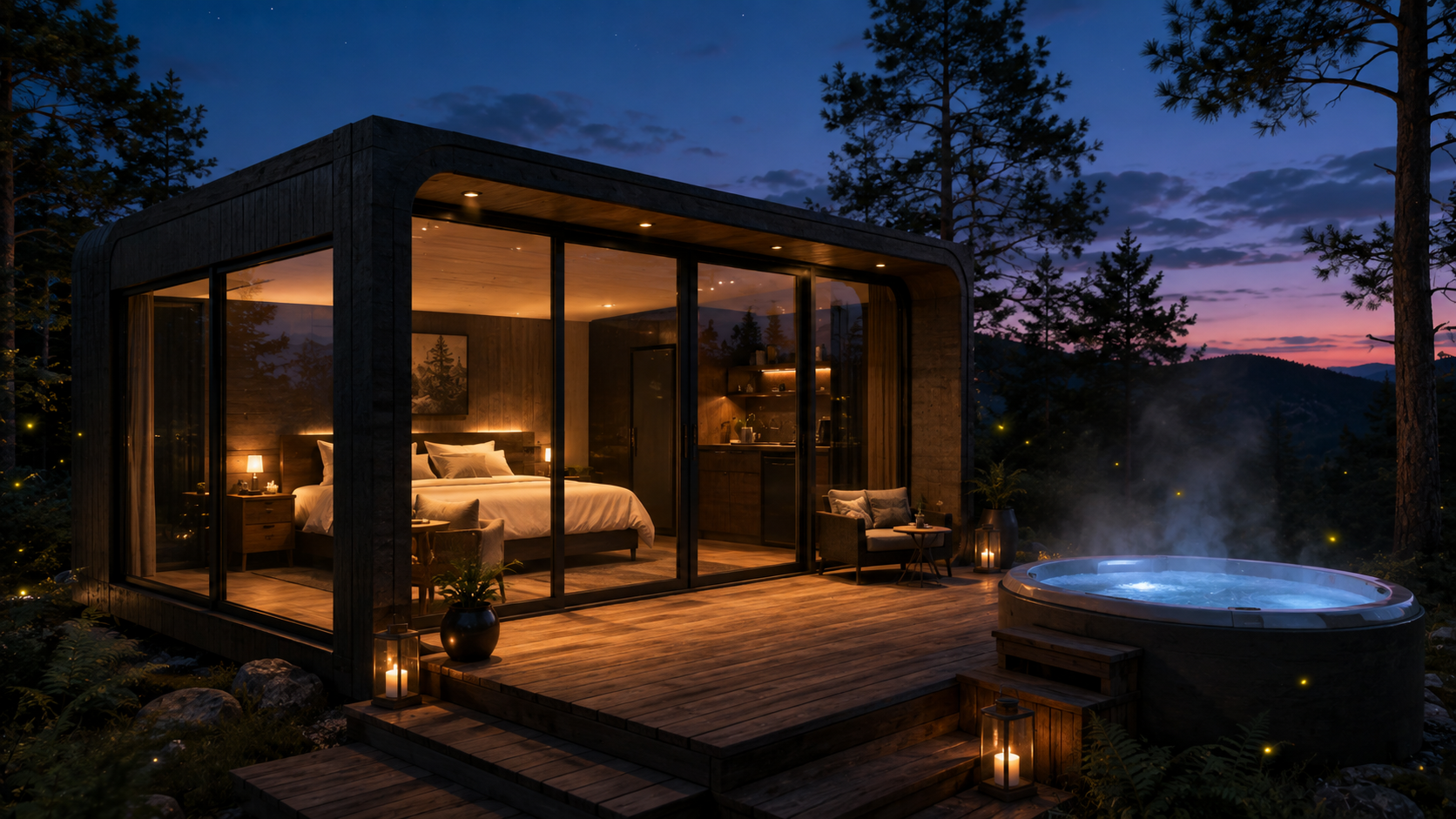
- Luxury Comfort: Guests enjoy perfectly climate-controlled environments and steaming hydrotherapy hot tubs, regardless of external mountain conditions.
- Zero-Carbon Footprint: The entire operation functions as a zero-carbon microgrid, utilizing local biomass feedstock rather than fossil fuels.
- Seamless Technology: Through the WISP-in-a-Box gateway and P2P AI agents, guests experience high-speed encrypted connectivity and autonomous logistics, such as drone-delivered gourmet meals, without the “Permitting Wall” of legacy infrastructure.
The elegance of this frictionless stay rests upon a sophisticated physical architecture—a machine that redefines our relationship with the carbon cycle.
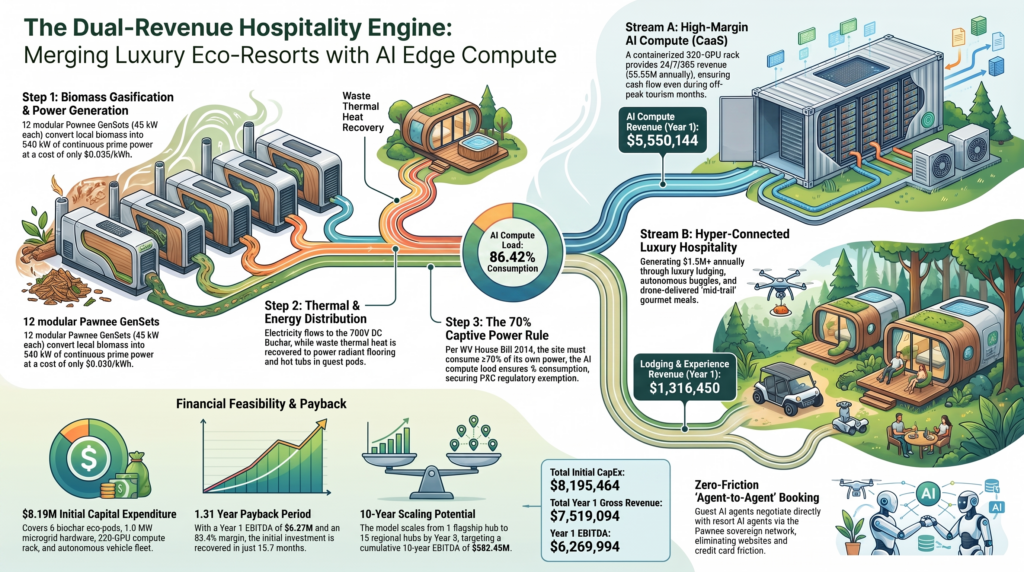
- Step 1: Alchemy in the Forest (Gasification and Syngas)
The process begins with the Biomass Feedstock—locally sourced wood and organic matter that would otherwise be left to decompose or be burned inefficiently. Rather than simple combustion, we utilize the Agra Energy Gasification Vessel to facilitate a thermochemical transformation. By “cooking” the wood in a low-oxygen environment, we break down the molecular structure of the biomass without releasing the carbon into the atmosphere as smoke.
What is Syngas? Syngas (synthetic gas) is a refined, clean-burning fuel produced by the gasification of biomass. Unlike burning wood, which is a primitive heat release, gasification allows us to capture the volatile energy of the forest in a gaseous form, which can then be used for high-precision electrical generation.
podcast
From an architectural perspective, this represents the beginning of a closed-loop carbon cycle, where the energy stored in the timber is unlocked for human use while the carbon is prepared for sequestration. Once we have refined the raw energy of the forest into a clean-burning fuel, we can inject it into a high-efficiency electrical system.
- Step 2: The Digital Nervous System (Pawnee GenSets & The 700V DC Busbar)
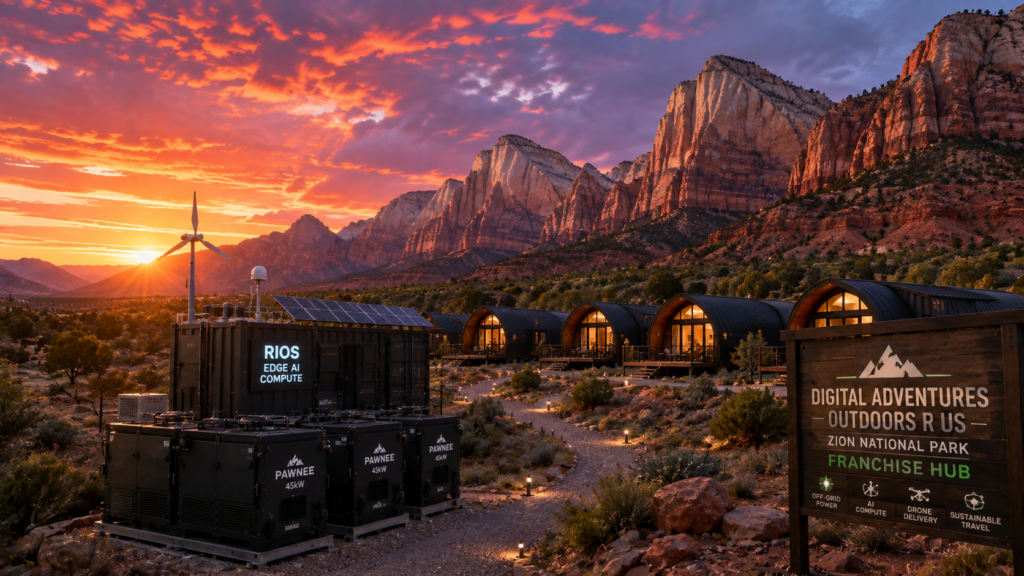
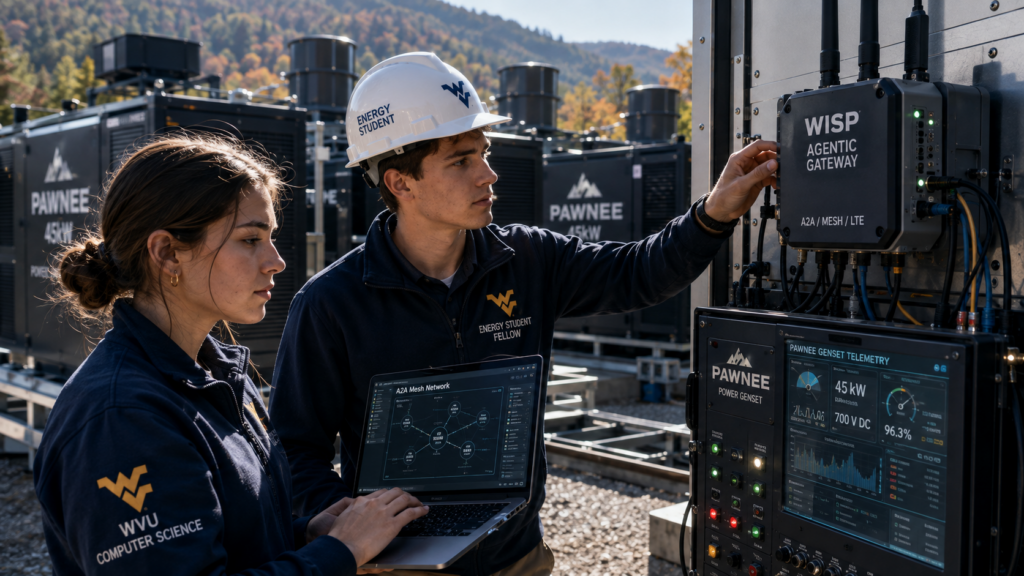
The core of the resort’s energy plant is a modular array of 12 Pawnee Power GenSets (45 kW each), providing 540 kW of continuous prime power. As a green architect, the most critical innovation here is the 700V DC Busbar. By using a direct-current highway, we eliminate the substantial conversion losses (often 10-15%) associated with traditional AC/DC inversion. This maximizes our conversion efficiency and ensures that every megajoule of syngas is utilized.
This energy highway carries two primary “passengers,” essential for both the legality and the luxury of the site:
Passenger Power Usage The “So What?” (Architectural & Economic Insight)
AI Compute (CaaS) >70% Generating $5.55M in annual revenue, this high-density GPU rack is the “legal anchor” that satisfies the H.B. 2014 Captive Power rule.
Eco-Pod Lodging 9.26% This precise allocation powers luxury climate control and the WISP-in-a-Box network, ensuring zero-friction connectivity for the guest.
However, electricity is only one byproduct of this process; the physical laws of thermodynamics provide us with an invisible secondary resource.
- Step 3: Capturing the Invisible (Waste Heat Recovery)
In the Hyper-Connected Wilderness, we do not permit “waste.” The Pawnee GenSets produce significant thermal energy during operation. Through a process of Thermal Energy Recovery, we capture the 65°C coolant from the engine exhaust jackets, repurposing it to maintain the resort’s thermal mass.
The Journey of the Heat:
- Recovery: Heat is harvested from the engine exhaust jackets at the microgrid hub.
- Transport: Piped through high-efficiency insulated lines to the lodging area.
- Climate Control: Powering radiant floor heating to maintain a stable thermal envelope within the pods.
- Luxury Amenities: Heating outdoor hydrotherapy hot tubs for year-round guest use.
While thermal energy provides immediate comfort, the solid remnants of our energy cycle provide the very bones of the resort.
- Step 4: Building from the Ashes (Biochar-Composite Pods)
The final stage of the loop addresses the physical byproduct of the Agra Energy vessel: Node 1 gasifier ash. This material is transported to our Node 5 manufacturing facility—situated on rehabilitated coal brownfields in Monongalia County. Here, the ash is processed into structural biochar-composite panels.
This is the forest reborn as architecture. These panels provide:
- Superior Thermal Envelope: An R-38 insulation value that dramatically reduces the HVAC load of the eco-pod.
- Safety: Inherent fire resistance, critical for structures nestled in dense forest environments.
- Negative Carbon Intensity: Because these panels sequester biochar (captured carbon) into the building’s very walls, the resort becomes a carbon sink rather than a source.
With the ash from the gasifier now providing the structural envelope for the guest, the transformation of biomass into a sovereign living system is complete.
- Conclusion: The High-Tech Wilderness Blueprint
The Infinite Loop is more than just a power plant; it is a “Sovereign Stack” that reclaims the Appalachian landscape. Local wood becomes syngas to generate power; that power fuels the AI compute required to generate $5.55M in high-margin revenue; the waste heat provides luxury warmth; and the leftover ash is manufactured into the very walls of the guest’s cabin.
This model is made possible by West Virginia’s House Bill 2014 (H.B. 2014). By adhering to the “Captive Power” rule—using over 70% of our energy for on-site AI compute—we can legally bypass the “Permitting Wall” of traditional utility companies. This allows us to deploy high-tech, off-grid resorts in a matter of months, rather than years. It is a blueprint for a future where we no longer choose between the wilderness and the world—we simply close the loop.