
Strategic Business Case: The Pawnee.us A2A Protocol and the Disintermediation of Global Travel
- The Disruption Thesis: Moving Beyond Extractive Aggregators
The global travel and outdoor experience market is a $1.1 trillion industry currently crippled by a fragile, centralized software layer. Global booking monopolies operate as extractive middlemen, siphoning 15% to 30% of gross revenue from local merchants while providing zero operational resilience in the “remote hollows” where high-margin outdoor commerce occurs. This is not merely an economic inefficiency; it is a structural vulnerability. The “Death of the Middleman” via the Pawnee.us Agent-to-Agent (A2A) Sovereign Engine represents a necessary shift toward infrastructure resilience and regional economic sovereignty.
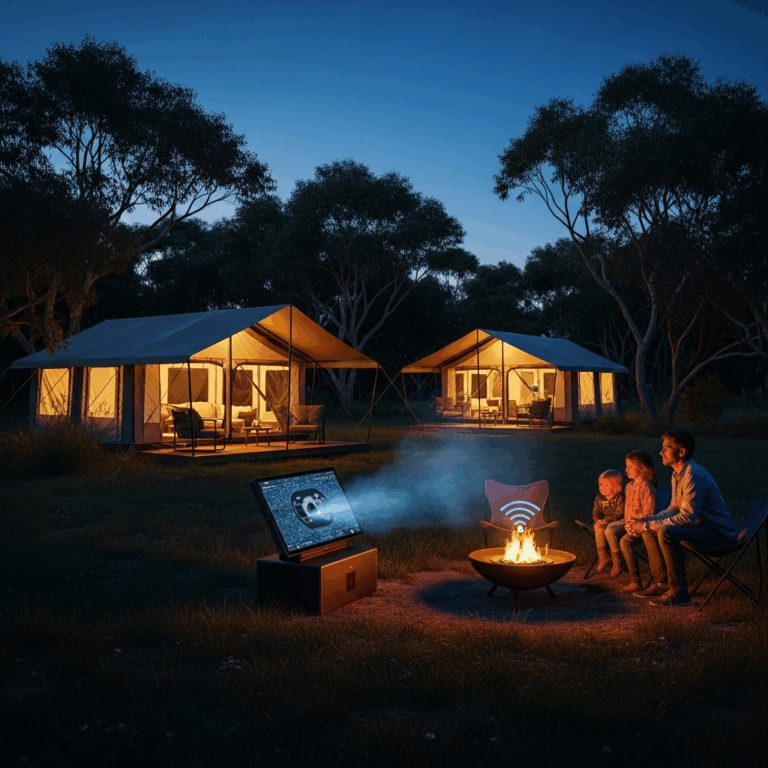
The Pawnee.us protocol offers a radical departure from the “Old Way.” While legacy aggregators rely on closed silos and cloud-dependent applications that fail in cellular dead zones, the A2A Sovereign Engine utilizes an air-gapped mesh to ensure 100% signal availability. Beyond mere cost savings, the Pawnee.us model introduces “Energy Arbitrage” and “Thermodynamic Integration”—linking transaction processing directly to local microgrid power generation. This creates a unique synergy where commerce, communication, and energy production are fused into a single, defensible local utility.

Dimension Legacy Centralized Aggregators Pawnee.us A2A Sovereign Engine
Take Rate 15% to 30% (Expedia, Viator, Airbnb) 2.5% Decentralized Protocol Fee
Connectivity 100% Cloud-Dependent (fails in dead zones) Air-Gapped Mesh (zero internet dependency)
Latency 5–15 minutes (manual browsing/forms) < 4 Seconds (AI agent negotiation)
Security Vulnerable Cloud Databases Hardware-secured TPM 2.0 Silicon Oracles
https://academy.dereticular.com/podcast/pawnee-us-the-agent-to-agent-sovereign-reservation-protocol/
Physical Automation None (requires manual confirmation) Direct API for Buggies and Drones
Replacing a 30% commission with a 2.5% protocol fee fundamentally re-engineers the unit economics of the outdoor economy. By retaining 97.5% of gross revenue locally, merchants can shift from surviving on corporate-dictated scraps to thriving via local wealth retention. This economic sovereignty is underpinned by a technological architecture that removes the cloud as a single point of failure.
- Technological Sovereignty: The A2A Mesh and OpenClaw Architecture
In the mountainous corridors of West Virginia, cellular dependency is a critical failure point for the high-margin outdoor economy. Traditional apps fail when travelers lose signal, leading to missed shuttles and lost revenue. Strategic sovereignty requires an air-gapped operational capability, utilizing local Hyphanet/NeoMesh relays to conduct commerce where fiber backbones do not reach.
The OpenClaw Agentic Protocol Kernel serves as the intelligence layer of this mesh. This lightweight engine enables autonomous agents to evaluate multi-attribute decision trees—incorporating price, time, location, and climate—to execute atomic smart contracts.
- Traveler Agent: Manages a user’s budget and preferences, broadcasting encrypted intent across the local mesh.
- Merchant Agent: Represents outfitters, managing inventory and pricing in real-time.
- Vehicle/Drone Agent: Coordinates physical logistics, such as autonomous Pawnee Buggies or delivery drones.
Security is enforced through a Zero-Trust hardware architecture. Transactions are verified via TPM 2.0 Silicon Oracles, which provide a hardware root-of-trust. Every data packet is cryptographically signed at the chip level, ensuring that location pings and service logs are immutable and spoof-proof:
\text{Signature}{\text{A2A}} = \text{Sign}{\text{TPM_PrivateKey}}\Big(\text{Agent_ID} \,|\, \text{Service_Timestamp} \,|\, \text{Price} \,|\, \text{GPS_Location}\Big)
The result is a system capable of <4-second settlement times with zero internet dependency. A traveler in a cellular dead zone can secure a raft rental, a shuttle pickup, and a hot meal through a P2P negotiation that clears instantly. This resilience is supported by the WISP-in-a-Box LTE gateway, which utilizes Dual-WAN failover (Starlink + LTE) to maintain global ledger sync while the local mesh handles the immediate commerce.
- Infrastructure and Deployment: The Master Bill of Materials (BOM)
Establishing a regional “Sovereign Corridor” requires a specific capital investment in physical hardware, transforming the network from a software abstraction into a tangible commerce utility. The following Master BOM details the requirements for a flagship corridor deployment (e.g., New River Gorge).
Gen 5 Product Name Unit Qty Unit Price (USD) Total Cost (USD)
WISP-in-a-Box Agentic (AI Gateway) 20 $9,997.00 $199,940.00
WISP-in-a-Box LTE (Dual-WAN) 10 $5,887.00 $58,870.00
WISP-in-a-Box Base (Sovereign) 50 $1,497.00 $74,850.00
Pawnee Power GenSet (45 kW) 4 $49,997.00 $199,988.00
Pawnee Flagship TAV (Mobile Hub) 1 $797,000.00 $797,000.00
Pawnee Hybrid Dune Buggy 1 $99,000.00 $99,000.00
Core Server Rack & TPM Hardware Lump Sum $185,000.00 $185,000.00
Security Audit & Legal Fees Lump Sum $150,000.00 $150,000.00
TOTAL INITIAL CAPEX $1,764,648.00
The initial CapEx of $1,764,648 establishes a “Sovereign Stack.” By integrating power generation (GenSets) with communication gateways, the network functions as a self-sustaining microgrid utility. This physical ownership provides the ultimate competitive moat, as it is protected by a regional regulatory framework designed to favor localized infrastructure.
- Regulatory Superiority: West Virginia H.B. 2014 and Statutory Protections
The “West Virginia Advantage” is the protocol’s primary regulatory moat. By weaponizing state-level statutory exemptions, Pawnee.us can achieve a speed-to-market that legacy competitors—bound by 24-month regulatory discovery phases—cannot match.
West Virginia House Bill 2014 (§5B-2-21 & §24-2-21a) provides the legal foundation for the A2A Engine. The protocol operates under the Certified Microgrid Program, which requires a Captive Power Requirement of ≥70%. By linking the Pawnee Power GenSets to the AI compute gateways, the system fulfills this mandate behind-the-meter.
Crucially, these statutes exempt local microgrid commerce networks from Public Service Commission (PSC) utility oversight. This strategic shield negates the impact of legacy monopoly lobbying and ensures regional autonomy. By operating outside traditional utility constraints, Pawnee.us can scale its infrastructure as a private, high-speed commerce network.
- 10-Year Pro Forma: Financial Viability and Scaling Dynamics
The financial model illustrates a transition from hardware-heavy regional setups to a high-margin global DePIN standard. As booking volume scales, the revenue mix shifts toward recurring protocol fees and SaaS licensing.
Revenue Category Year 1 Year 2 Year 3 Year 4 Year 5 Year 7 Year 10
Booking Vol (GMV) $12.8M $65M $250M $850M $2.5B $7.5B $20B
A2A Protocol Fee (2.5%) $320K $1.625M $6.25M $21.25M $62.5M $187.5M $500M
WISP Hardware Sales $333,660 $850K $2.4M $6.5M $14M $28M $55M
Enterprise SaaS Fees $120K $450K $1.8M $5.2M $12.5M $32M $75M
GROSS REVENUE $773,660 $2.925M $10.45M $32.95M $89M $247.5M $630M
EBITDA $323,660 $1.675M $6.8M $23.65M $67.8M $201.5M $532.5M
Net Pre-Tax Profit $143,660 $1.315M $6.08M $22.21M $64.92M $196.5M $524.5M
Key Performance Metrics:
- Initial CapEx: $1,764,648
- Year 1 EBITDA Margin: 41.8%
- Payback Period: 22.2 Months (1.85 Years)
- 10-Year IRR: 184.2%
- NPV (10% Discount): $1.24 Billion
The EBITDA margin expands from 41.8% to 84.5% by Year 10. This aggressive profitability is driven by the diminishing weight of Hardware COGS and the inherent scalability of software-driven protocol fees. Once the corridor’s physical nodes are established, the marginal cost of processing additional booking volume is essentially zero.
- The Execution Roadmap: From New River Gorge to Global Standard
The roadmap utilizes hyper-local saturation to prove the protocol’s resilience before scaling into broader logistical markets.
Phase 1: Regional Pilot (Years 1–2) Targeting 100+ merchants in the New River Gorge corridor. A critical component is the WVU Student Developer Pipeline, where Computer Science fellows build open-source Point-of-Sale (POS) connectors. These students earn developer micro-fees (0.5% of booking volume), creating a sustainable talent acquisition model that integrates the next generation of engineers into the protocol’s growth.
Phase 2: National Expansion (Years 3–5) Scaling across the Appalachian corridor and into national recreation hubs. This phase leverages the protocol’s air-gap capabilities to integrate with regional public transit and Non-Emergency Medical Transportation (NEMT) dispatches, demonstrating utility beyond tourism.
Phase 3: Global DePIN Standard (Years 6–10) Establishing Pawnee.us as the global open-source standard for off-grid autonomous commerce. With a target of $20B+ in annual gross booking volume, the protocol will effectively disintermediate legacy monopolies in the international travel market.
The “SO Strategy” (Strengths-Opportunities) weaponizes extreme merchant backlash against legacy 25% fees to ensure rapid, 100% regional onboarding. By offering a 10x cheaper alternative that functions in any environment, the A2A transition is the only logical choice for stakeholders seeking regional economic sovereignty.