Beyond the Edge of the Map: The New Tech That’s Building Tomorrow’s Adventure Hubs
Beyond the Edge of the Map: The New Tech That’s Building Tomorrow’s Adventure Hubs
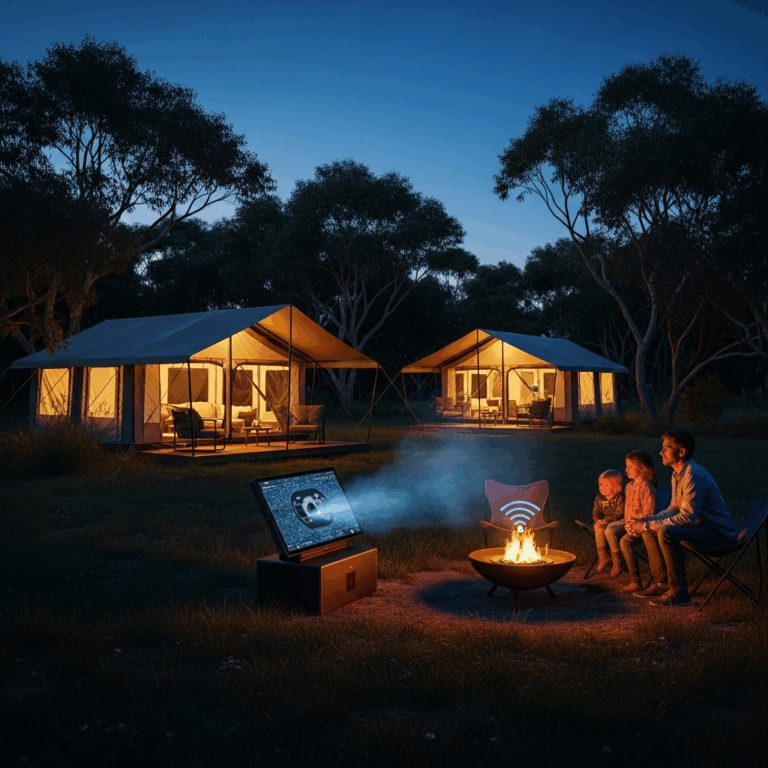
We’ve all been there. You’re deep in a place of breathtaking beauty—a mountain valley, a remote coastline, a sprawling forest—and you are utterly, completely disconnected. Sometimes, that’s the goal. But often, it’s a barrier. It’s the lodge that can’t process a credit card, the guide who can’t get a real-time weather update, the emergency call that won’t go through. It’s the line where the modern world stops, and with it, a world of safety, opportunity, and enhanced experience.
For decades, we’ve accepted this as a fundamental trade-off of the great outdoors. But what if it didn’t have to be? What if we could build resilient, connected, and economically thriving hubs of adventure in the most remote corners of the world? And what if the very infrastructure that connected them paid for itself?
This isn’t a dream from a sci-fi novel. A new architectural philosophy, embodied by platforms like DeReticular’s Rural Infrastructure Operating System (RIOS), is making this possible. It’s a game-changer for anyone who believes that technology, used wisely, can unlock the next generation of outdoor adventure and hospitality.
The Old Model is Broken. The New One is a Profit Engine.
The traditional way to get the internet to a remote lodge or village is brutally expensive and economically fragile. It involves hoping a big company extends a cable, or paying a fortune for a spotty satellite link.
The RIOS model flips this on its head. At the core of every deployment is a powerful, revenue-generating engine: an AI Compute Cluster.
Think of it as a quiet, digital tenant that moves into the community’s proverbial basement. This cluster performs complex computing tasks for the global tech industry, a service in high demand. In return, it pays “rent” in the form of a steady revenue stream. That money is then used to fund everything the community needs: resilient power, high-speed internet, and a robust local network.
The result? The connectivity and power provided to the local lodge, the guiding outfitter, and the visiting adventurer are the sustainable dividends of a profitable core business. The community transforms from a “last-mile” problem into a self-sufficient digital oasis. But to make this work, the system needs an incredibly smart and resilient digital nervous system, built on battle-tested principles.
The Secret Sauce: A Digital Toolkit for the Modern Explorer
To understand what makes this new kind of network so special, you don’t need a degree in computer science. You just need to think like an adventurer.
1. The VIP Lane for What Matters Most (The MPLS Philosophy)
Imagine you’re at a remote base camp. The network is being used by a climber getting a critical storm warning, a family video-chatting with grandma, and a remote worker uploading a massive file. On a normal network, it’s a chaotic free-for-all. But on a RIOS network, the system acts like a seasoned expedition leader. It uses a principle known as MPLS to create a priority lane, ensuring the climber’s life-saving weather data gets through instantly, while the other tasks use the remaining bandwidth. For a lodge owner, it means their payment terminal will always work, even when every guest is streaming a movie. It’s about ensuring reliability when it counts.
2. The Community Cache: Your Digital Field Guide (The NDN Vision)
This is where it gets truly revolutionary for the outdoor experience. The internet today is like having only one copy of every book in a single, distant library. If the road to that library is closed, no one gets to read. A newer concept called Named Data Networking (NDN) works like a local gear library for data.
The first person in the area to download a high-resolution topographical map, a video on how to tie a rescue knot, or a guide to local edible plants automatically places a copy in the community’s “digital cache.” When the next person wants that same information, they get it instantly from a device nearby—even if the main satellite link is down in a blizzard. This creates an ever-growing, shared library of local knowledge that makes the entire community smarter and safer. It’s the ultimate backup, built by the community, for the community.
3. The Sovereign Territory: Your Private Digital Map (The ldns Principle)
When you’re off the grid, you need to be self-reliant. A RIOS network is designed for this kind of digital sovereignty. It uses principles from secure naming technologies like ldns to create its own private, internal directory. This means the local trail map server, the lodge’s booking system, and the emergency alert network all work perfectly, securely, and independently, even if the community is completely cut off from the global internet.
It’s the foundation for a true Digital Adventure DAO (Decentralized Autonomous Organization)—a community that governs its own digital destiny, with the resilience to thrive no matter the external conditions.
The Adventure Destination of Tomorrow, Today
This isn’t just theory. Imagine what this technology unlocks:
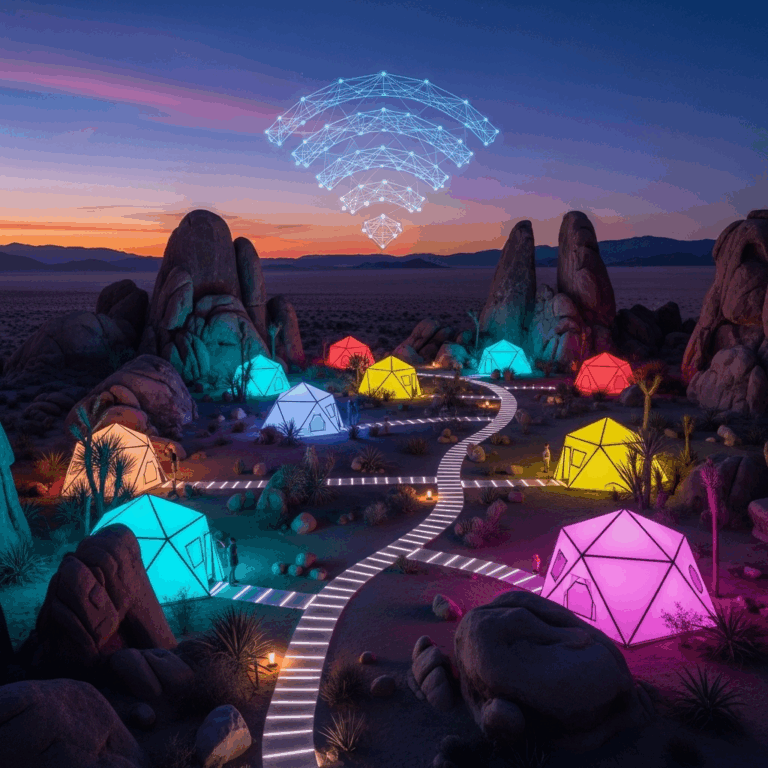
- The Eco-Lodge Reimagined: A remote lodge can offer the seamless experience of a city hotel—flawless Wi-Fi, instant bookings, digital payments—all while operating on 100% renewable energy managed by the same smart system. It can become a world-class destination for digital nomads and “work-from-the-wilderness” retreats.
- Augmented Reality Adventures: With a robust local network, outfitters can create AR-enhanced experiences—trail overlays that identify peaks, apps that bring the history of a ruin to life, or guided tours that highlight constellations in the night sky.
- Unprecedented Safety and Resilience: During a wildfire or flood, a community with a sovereign RIOS network stays connected. Guides, emergency services, and residents can coordinate and share information when all other lines of communication are down.
- Community-Owned Prosperity: The revenue from the AI cluster doesn’t just keep the lights on. It can be reinvested to maintain trails, fund conservation projects, or support local artisans, creating a virtuous cycle where technology directly enhances both the natural environment and the local economy.
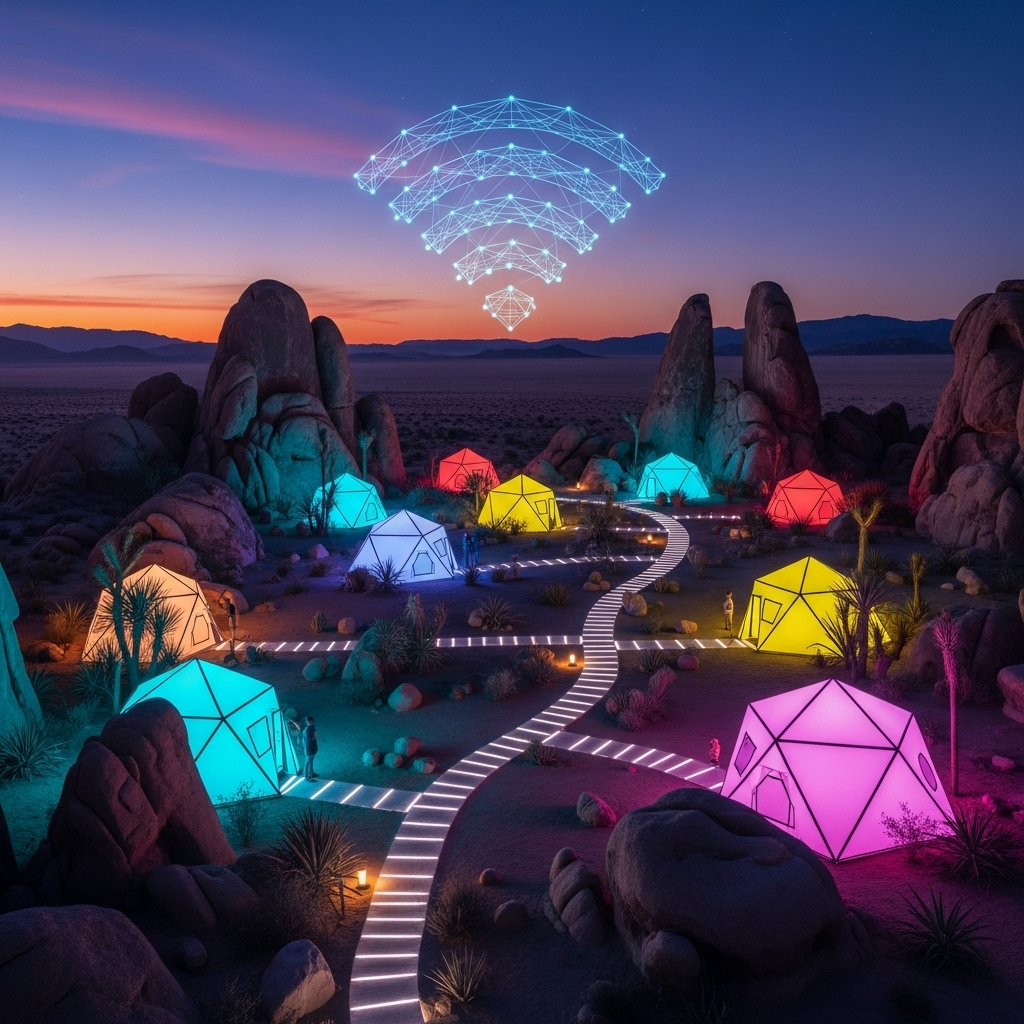
This is the dawn of a new era for rural travel. We are moving beyond the simple goal of “getting a signal” and toward the vision of building intelligent, resilient, and prosperous adventure hubs. For the community at Digital Adventures Outdoors R Us, this is the enabling platform we’ve been waiting for—the tool that will allow us to build the future of outdoor exploration, one sovereign, connected community at a time.