Digital Adventures Outdoors R US (DAOSRUS) An Ecosystem Analysis
Executive Summary
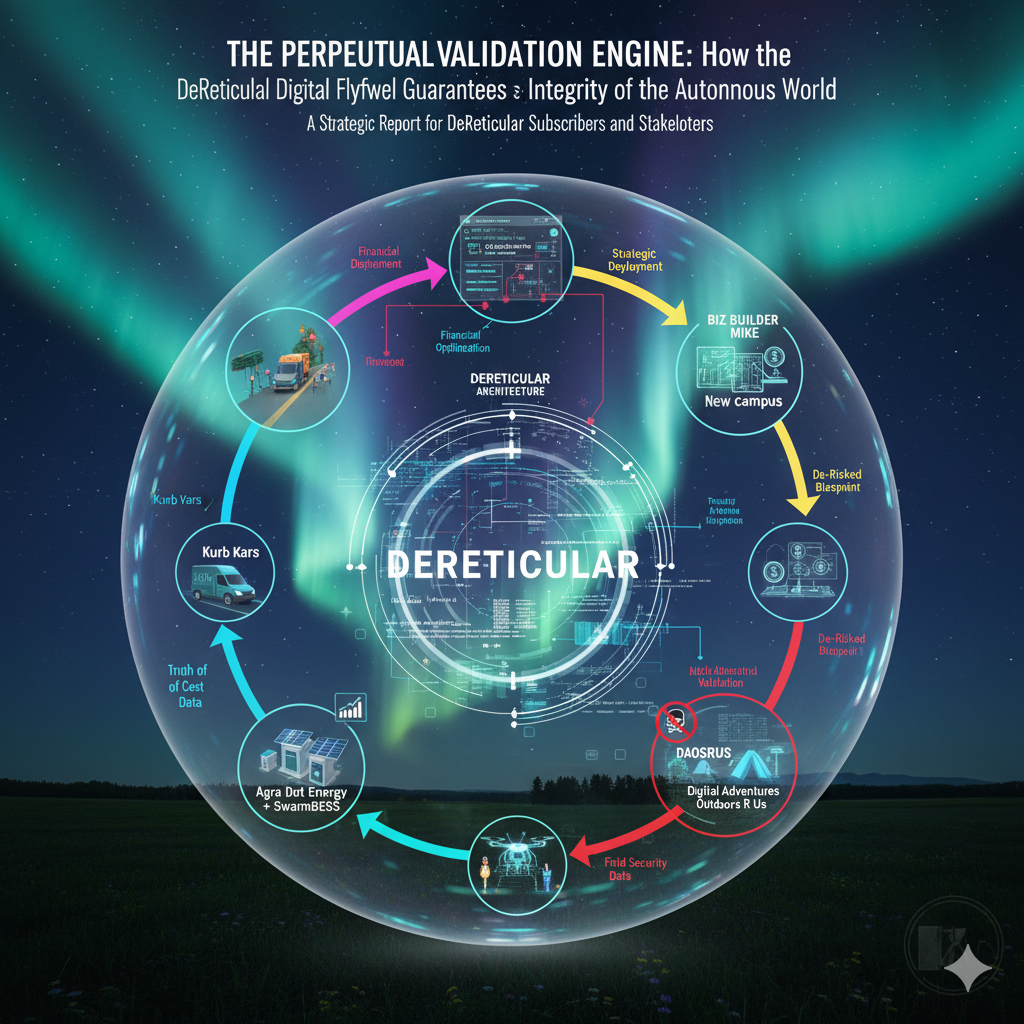
As of December 31, 2025, Digital Adventures Outdoors R US (DAOSRUS) has transitioned from a legacy eco-tourism company into the consumer-facing “Experience Layer” of the DeReticular ecosystem. Operating as a Decentralized Autonomous Organization (DAO), DAOSRUS has abandoned the traditional travel agency model in favor of a decentralized network that coordinates “Sovereign Adventures.” Its mission is to replace “tourism” with “stewardship,” leveraging a proprietary technology stack to offer high-fidelity, carbon-negative experiences in remote locations.
The core of its offering is the “Digital Passport,” an identity protocol based on Radio Frequency Fingerprinting (RFF) that provides seamless, “Zero-Trust” access to network assets, including autonomous Kurb Kar rovers and secure RIOS campuses. The company’s flagship product, the “Kaabong Blueprint” Expedition in Uganda, demonstrates the full integration of its partners: Agra Dot Energy provides off-grid plasma gasification power, Kurb Kars supplies autonomous logistics, and DeReticular underpins the entire operation with high-speed connectivity and security. While possessing a monopoly on access to this unique ecosystem, DAOSRUS faces strategic challenges, including a dependency on a single operational node, user friction related to its Web3 foundation, and potential regulatory threats to its DAO model. The strategic imperative for 2026 is to abstract this technical complexity and rapidly expand its physical footprint to match its scalable software.
——————————————————————————–
1. Corporate Identity and Mission
Overview and Evolution
Digital Adventures Outdoors R US (DAOSRUS) is a decentralized adventure tourism platform founded by Michael Noel. The entity was formed in late 2025 following a strategic pivot from its predecessor, “Ree Boot Eco Tours.” This transformation represents a fundamental shift away from what Noel termed the “Old World” of travel—an industry characterized by friction from Online Travel Agencies (OTAs), “carbon guilt,” and centralized control. DAOSRUS now functions as the “user interface” or “Experience Layer” for the broader DeReticular sovereign technology ecosystem.
Core Philosophy
The company’s mission is built on a rejection of extractive tourism and an embrace of technologically enabled stewardship. This philosophy is encapsulated in several key concepts:
- “Tourism is Dead; Long Live Stewardship”: The central idea is to move from a company that sells tours to a community that stewards the land, creating a regenerative economic model.
- “The Frictionless Frontier”: DAOSRUS aims to eliminate traditional travel friction points like check-ins, tickets, and keys by utilizing physics-based identity verification.
- “High-Fidelity Adventure”: The brand promise is to deliver experiences that are rugged in nature but are powered by advanced, sovereign industrial technology, offering a unique blend of wilderness and high-tech infrastructure.
- Motto: The company’s technological ethos is captured in its motto: “The Ultimate Trail Map is Built on Radio Waves.”
Decentralized Autonomous Organization (DAO) Model
Unlike a traditional corporate structure, DAOSRUS is owned and governed by its members (“Sovereign Stewards”) and local operators (“Village Engineers”). This model is designed to redirect value to the local level and ensure network resilience.
- Governance: Members who hold the “Sovereign Steward” governance token have voting power on network decisions, such as the location of new nodes and the allocation of treasury funds.
- Tokenomics: Revenue from expeditions is distributed automatically via smart contracts according to a predefined split:
- 40% to Local Infrastructure (Agra Energy Nodes)
- 30% to Local Guides/Stewards
- 30% to the DAO Treasury for network expansion
——————————————————————————–
2. The Sovereign Stack: Ecosystem Integration
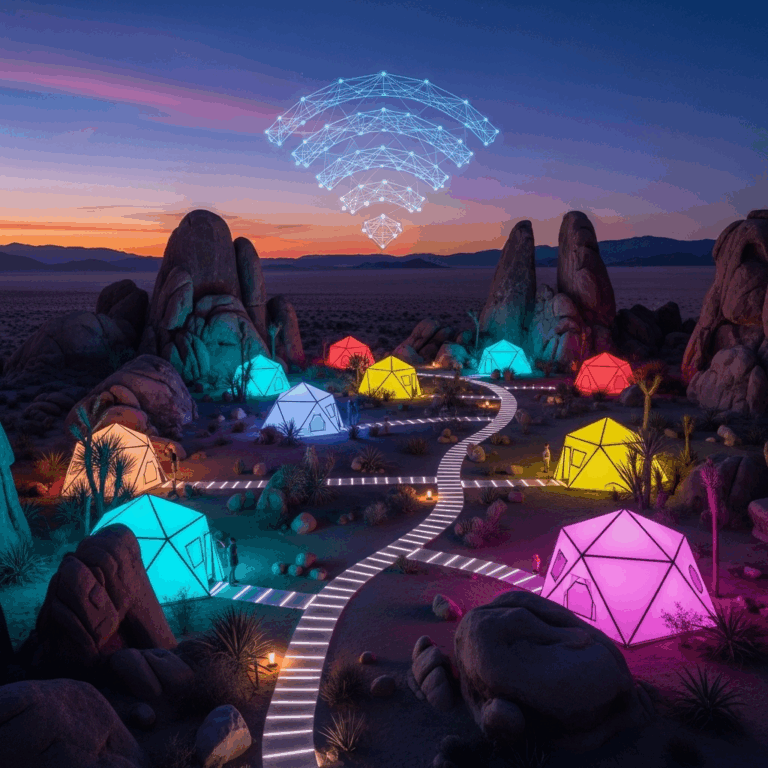
DAOSRUS does not operate in isolation; its product is the integrated application of technologies from its ecosystem partners. It functions as the showroom for a self-sufficient, off-grid infrastructure model known as the “Sovereign Stack.”
| Partner | Role | Integration & Function |
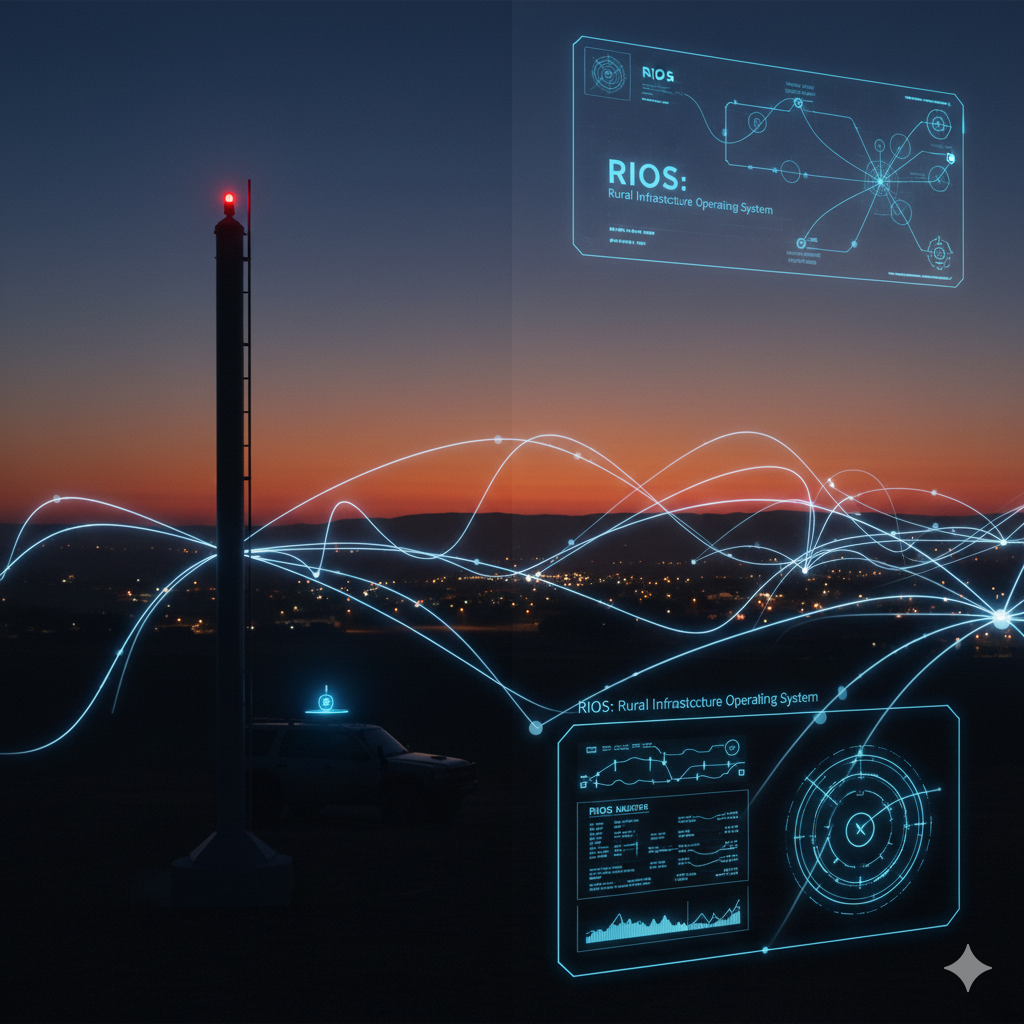
| DeReticular | The Brain | Provides the RIOS (Rural Infrastructure Operating System) and high-performance Wi-Fi 7 mesh networks, enabling enterprise-grade connectivity in remote wilderness. It also supplies the core Radio Frequency Fingerprinting (RFF) security protocol. |
| Agra Dot Energy | The Heart | Serves as the engine of the operation, providing 100% carbon-negative baseload electricity through plasma gasification of local biomass (e.g., hemp waste). This justifies the trip, allowing travelers to witness the “Future of Industry.” |
| Kurb Kars | The Muscle | Supplies the autonomous, electric, off-road logistics vehicles. DAOSRUS provides the RFF authentication layer that grants access, enabling “Zero-Friction Mobility” without keys or rental counters. |
| Biz Builder Mike | The Architect | Designs the RIOS Campuses where DAOSRUS adventures take place, ensuring the nodes are safe, connected, and economically viable for sovereign hospitality. |
——————————————————————————–
3. Product and Service Offerings (as of December 2025)
DAOSRUS sells access, identity, and sovereign experiences rather than traditional physical products. Its catalog is intentionally exclusive, focused on validating its technology and building a core community.
| Product Name | Category | Technology / Description | Status |
| The Digital Passport | Access & Identity | Uses Radio Frequency Fingerprinting (RFF) to create a unique digital identity from a user’s mobile device. It unlocks Kurb Kars, grants access to RIOS Campuses, and stores “Proof of Experience” on the blockchain. | Limited Beta (Pilot Explorers Only) |
| The “Kaabong Blueprint” Expedition | Flagship Experience | A 7-14 day adventure in Karamoja, Uganda (Node 4). Guests stay in luxury eco-pods on a 7,000-acre hemp campus, travel in autonomous Kurb Kars, and experience a fully carbon-negative trip powered by Agra Dot Energy. | Open (Flagship Offering) |
| Sovereign Steward Membership | DAO Governance | A governance token granting voting rights on network development. Initially offered to legacy “Ree Boot Eco Tours” clients to convert their travel credits into ownership stakes. | Invite Only |
Limited Opportunities
- “Pilot Explorer” Status: A designation for a limited number of early adopters who were issued Digital Passports to beta-test the autonomous network. Only these members can book “Expeditionary” tier trips.
- “Ree Boot” Legacy Transfer: A one-time offer in December 2025 for former clients to convert old travel credits into DAO Governance Tokens.
——————————————————————————–
4. Strategic Analysis: GAP and SWOT
An analysis as of year-end 2025 reveals significant strengths alongside critical gaps and threats that must be addressed for the DAO to scale successfully.
GAP Analysis
- The Inventory Gap (Single Point of Failure):
- Current State: The network’s value proposition relies almost entirely on the single “Kaabong Blueprint” expedition in Uganda.
- Desired State: A global network of 8-12 fully operational “Sovereign Nodes” (Project Octagon).
- The Gap: The physical nodes are not scalable at the same speed as the software. The DAO needs more destinations online immediately to justify membership costs but is constrained by partner construction speed.
- The User Experience Gap (“Web3” Friction):
- Current State: The DAO structure, governance tokens, and crypto-wallets appeal to “Crypto-Natives” but create significant confusion and friction for the legacy, mainstream client base.
- Desired State: An “Invisible Web3” experience where users can pay with fiat currency and interact with a simple interface, while tokenization and governance are handled seamlessly on the backend.
- The Gap: The technology is currently “loud” and requires “UX Abstraction” to become “quiet” enough for the luxury adventure market.
- The Identity Gap (Hardware Saturation):
- Current State: The RFF identity system requires specific high-end smartphone radio hardware to function as a “Zero-Trust” key.
- Desired State: Universal compatibility, allowing any smartphone to serve as a Digital Passport, or the availability of affordable hardware dongles.
- The Gap: A lack of “Device Agnosticism” prevents mass adoption and creates logistical challenges for groups or families.
SWOT Analysis
| Strengths (Internal) | Weaknesses (Internal) |
| Monopoly on Access: DAOSRUS is the sole interface for accessing Kurb Kars and RIOS Campuses. | Identity Crisis: The brand is caught between “Eco-Tourism” and “Cyber-Punk Stewardship,” with a clunky name. |
| Proprietary RFF Security: Physics-based identity solves fraud and scalping, providing defense-grade security. | Dependency on Partners: The entire product fails if Agra Dot Energy or Kurb Kars experience operational issues. |
| Low Overhead DAO Model: Infrastructure costs are offloaded to local nodes, creating a lean corporate entity. | Exclusivity vs. Revenue: The “Invite Only” status and vetting process create hype but severely limit revenue scalability. |
| High Fidelity Narrative: The unique story of traveling to the “Future of Industry” has no direct competitors. |
| Opportunities (External) | Threats (External) |
| The Sovereign / “Parallel” Economy: Appeals to a growing demographic seeking alternatives to corporate ESG structures. | Regulatory Crackdown: The governance token could be classified as an unregistered security by regulators like the SEC. |
| The Digital Nomad Boom: The only adventure product guaranteeing enterprise-grade connectivity in remote locations. | Safety and Liability: An accident involving an autonomous Kurb Kar in a wilderness setting could bankrupt the DAO. |
| Regenerative Finance (ReFi): A powerful marketing tool for ethical travelers, funneling funds directly to local communities via the blockchain. | “Glamping” Competition: Traditional luxury brands (Four Seasons, Aman) are entering the adventure space with superior hospitality, competing on comfort versus DAOSRUS’s “freedom.” |
| Corporate Retreats: Secure, off-grid nodes are ideal for high-security corporate strategy summits. |
——————————————————————————–
5. Strategic Vision and Future Opportunities
The “Sovereign Guest Experience”
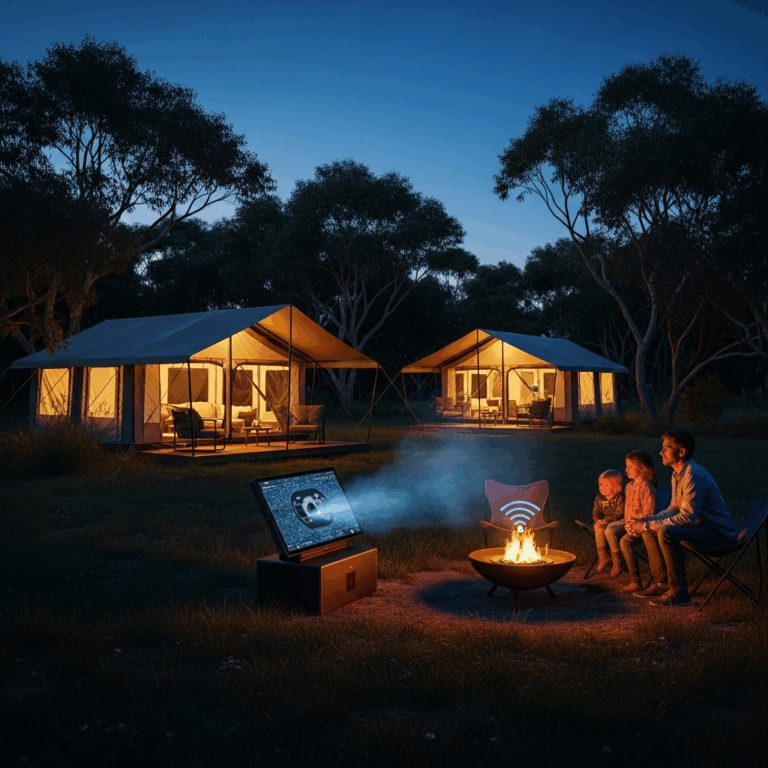
DAOSRUS is pioneering a new paradigm of “Sovereign Hospitality” by creating fully self-reliant destinations. Unlike traditional eco-tourism that compromises on comfort, DAOSRUS brings its own universe—power, connectivity, and logistics—to the wilderness. This allows for guilt-free luxury, where a guest’s stay is explicitly carbon-negative due to the biochar produced by Agra’s plasma gasification units.
The Hospitality Digital Flywheel
A key strategic innovation is an economic model that turns hospitality from a cost center into a revenue generator.
- Visit & Input: A guest books a stay, consuming food and energy.
- Conversion: The camp’s waste is converted into energy by Agra units.
- Computation: This energy powers an on-site RIOS Compute Cluster, which earns revenue by processing AI workloads for global clients while guests sleep.
- Subsidy & Result: The compute revenue subsidizes the guest’s stay and funds the local economy, creating higher wages and better land protection. A guest’s vacation literally powers local development.
“Edutourism” and the DeReticular Academy
A significant opportunity lies in integrating educational experiences into the travel packages. Guests can attend “Sovereign Systems” retreats to learn how to operate the technology they are experiencing. This “Living Lab” concept, described as “a luxury cruise ship crashed into a high-tech laboratory,” allows visitors to earn certifications from the DeReticular Academy while enjoying a high-end adventure.
Strategic Recommendation for 2026
To address its most pressing challenges, DAOSRUS is advised to focus on bridging the User Experience Gap.
- Action 1: Develop a “Web2.5” mobile application that masks the underlying crypto-infrastructure, presenting governance tokens as “Rewards Points” and RFF access as “Digital Keys.”
- Action 2: Rapidly diversify the expedition catalog beyond Uganda by launching “Pop-Up Nodes” using portable RIOS Expeditionary kits, creating temporary adventure sites while permanent infrastructure is developed.